Google Flights vs Skyscanner 2026: Which Finds Cheaper Flights?



December 23, 2025
5 min read
Table of Contents
If you’ve ever fallen down the airfare rabbit hole, you’ve probably asked some version of these questions: Should I use Google Flights to book my flight? Or another flight search engine, like Skyscanner? Does it even matter? Both are giants in the flight search world. Both promise to help you find cheap flights. And both are often mentioned in the same breath when travelers debate which tool is better.
Despite how similar they seem on the surface, Google Flights and Skyscanner actually do work differently—and those differences matter when you’re trying to save some serious cash. Depending on where you’re flying, how flexible you are, and what kind of traveler you are, one may outperform the other.
This Skyscanner vs. Google Flights comparison breaks down how each platform works, where each shines (and stumbles), and how savvy travelers will use them together to find the cheapest possible fares in 2026.
What are Google Flights and Skyscanner?
At a high level, both Google Flights and Skyscanner are flight search engines, not booking sites. They scan airlines and online travel agencies (OTAs), then send you elsewhere to actually book the flight. But the way they gather and display prices—and the types of fares they surface—can be different from other flight search engines, even one another.
How each platform works
Google Flights pulls pricing directly from airlines and select OTAs using near real-time data. Its focus is speed, clarity, and helping travelers understand whether a price is low, typical, or high. You search, compare, and then book directly with the airline or a trusted booking partner.
Skyscanner, on the other hand, acts more like a meta search engine. It casts a wider net across airlines, budget carriers, and a huge range of OTAs—some reputable, some less so. It’s particularly strong at surfacing fares that Google Flights may skip, especially from low-cost carriers or international booking sites.
This core difference drives most of what you’ll see in a Google Flights vs. Skyscanner comparison.
Key differences in scope and airline coverage
- Google Flights focuses on major airlines, alliances, and direct airline pricing
- Skyscanner includes more ultra-low-cost carriers and international OTAs
- Google prioritizes speed and price accuracy
- Skyscanner prioritizes breadth and variety
Neither approach is “better” in every situation. But, bear in mind, they often lead to different results.
Why travelers choose Google Flights
Google Flights has become the default starting point for many travelers, and it’s easy to see why.
Fast results and clean interface
Google Flights is lightning-fast. Results load almost instantly, filters apply smoothly, and the interface is clean enough that you don’t feel like you’re deciphering a spreadsheet. For travelers who value clarity over clutter, this is clutch.
You’re not bombarded with pop-ups, upsells, or questionable booking sites. Instead, you get a clean list of flights with clear pricing and airline branding.
Price tracking, calendar view, and fare predictions
This is where Google Flights shines compared to Skyscanner.
Its date grid and price calendar make it easy to see which days are cheapest at a glance. You can also turn on price tracking for specific routes and get alerts when fares drop—no manual refreshing required.

Google also labels fares as “low,” “typical,” or “high” based on historical data, helping travelers decide whether to book now or wait. That context is something Skyscanner largely lacks.
Best for mainstream carriers and direct airline fares
If you’re flying a major airline—think Delta, United, American, Lufthansa, Air France—Google Flights usually shows the most accurate pricing and sends you directly to the airline to book.
That matters because booking directly often means:
- Easier changes or cancellations
- Faster assistance from customer service during delays
- Fewer surprises at checkout
For many travelers, that reliability alone makes Google Flights the better choice.
When Skyscanner outperforms Google Flights
Despite Google Flights’ polish, Skyscanner still manages to excel in certain departments.
Access to budget airlines and OTAs
Skyscanner excels at surfacing fares from budget airlines that Google Flights often skips or only partially includes. Think Ryanair, Wizz Air, Scoot, AirAsia, and smaller regional carriers around the world.
If you’re flying within Europe, Southeast Asia, or parts of Latin America, Skyscanner may show dramatically cheaper options, especially for short-haul routes.
This is where many Skyscanner vs. Google Flights 2025 comparison debates tilt in Skyscanner’s favor.
Flexible-date searches and “Everywhere” feature
Skyscanner’s “Everywhere” search is one of its standout features. Instead of choosing a destination, you select “Everywhere” and see the cheapest countries or cities you can fly to.
Google Flights’ Explore Map is more powerful visually, but Skyscanner’s approach is simpler and often better for ultra-budget inspiration.
Ideal for international or multi-city routes
For complex international itineraries—especially involving smaller airports or mixed low-cost carriers—Skyscanner often surfaces options Google Flights doesn’t show.
If you’re hopping between continents, flying open-jaw routes, or stitching together budget legs, Skyscanner gives you more raw material to work with.
Comparison table
| Feature | Google Flights | Skyscanner |
| Price coverage | Major airlines and direct fares | Major airlines, budget carriers, and OTAs |
User interface
| Clean, fast, and intuitive | Flexible, “Everywhere” search, and more filters |
| Price alerts | Alerts with fare predictions | Basic alerts and notifications |
| Multi-city trips | Limited options | Strong support for multi-city searches |
| Budget airlines | Sometimes misses low-cost airlines | Usually included |
| Flexible dates | Calendar view showing lowest fares | Flexible dates & “Everywhere” searches |
| Extra fees visibility | Clear baggage and seat info | Sometimes unclear or hidden fees |
| Mobile app | No official booking app | Full-featured app with alerts |
Booking process
| Redirect to airline or OTA websites for final booking | Redirect to airline or OTA websites for final booking |
| Best for | Quick searches, mainstream routes | Bargain hunting, flexible trips, less-common routes |
Pros
| Fast, accurate, offers fare predictions | Wide coverage, flexible search, finds deals |
| Cons | May miss some budget airlines | Some OTAs unreliable, hidden fees possible |
Drawbacks of each platform
Neither tool is perfect, and understanding their weaknesses is key to avoiding frustration when searching for and booking flights.
Google Flights may miss ultra-low-cost or mistake fares
Google Flights sometimes excludes:
- Small budget airlines
- Certain OTA-exclusive fares
- Rare “mistake fares” before they’re widely available
If a deal exists outside mainstream distribution channels, Google Flights may never show it.
Skyscanner can show outdated fares or hidden fees
Because Skyscanner pulls from so many OTAs, prices can occasionally be:
- Outdated
- No longer available
- Missing baggage or seat fees
You may click a fare only to see the price jump at checkout—a phenomenon we call “ghost fares.”
Verify final price on airline or trusted OTA before booking
No matter which tool you use, always verify the final price before booking. Look closely at:
- Baggage allowances
- Seat selection fees
- Change and cancellation policies
The cheapest fare isn’t always the best deal.
How to use both platforms for maximum savings
The smartest travelers don’t choose sides—they use both strategically.
Step 1: Start with Google Flights to find baseline fares
Begin with Google Flights to understand:
- Typical pricing
- Cheapest dates
- Best airlines and routes
This gives you a reliable baseline.
Step 2: Cross-check on Skyscanner for low-cost carriers
Once you know what a “normal” fare looks like, check Skyscanner to see if budget airlines or lesser-known OTAs beat it.
If Skyscanner shows something significantly cheaper, dig into the details.
Step 3: Set price alerts on both platforms
Google Flights offers robust alerts for specific routes. Skyscanner allows alerts, too, though they’re sometimes slower to update. Using both increases your chances of catching a sudden drop.
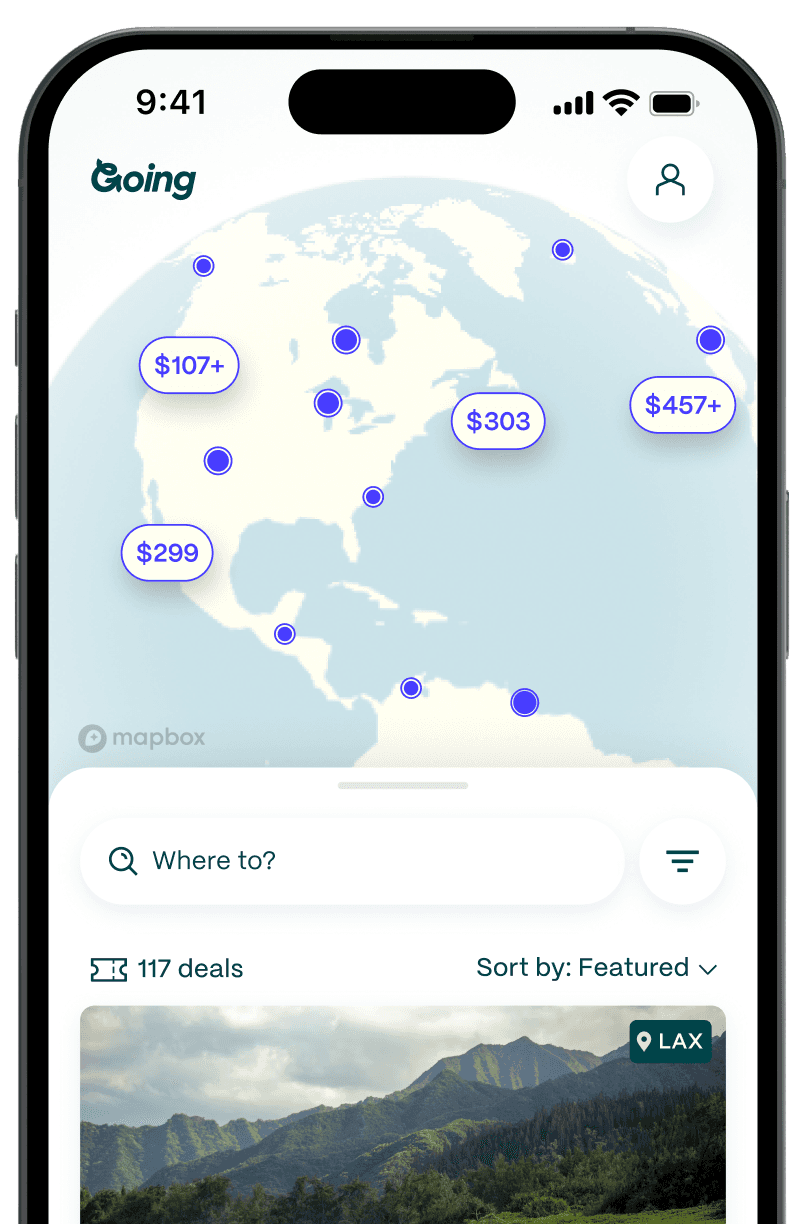
Using Going’s flight alerts as a third reference point helps ensure that you get the cheapest fare every time, whether it’s available through Google Flights, Skyscanner, or another flight search engine, online travel agency (OTA) like Kayak, or directly with the airline.
Step 4: Compare total cost including baggage and fees
Always compare the true cost, not just the headline price. A $40 difference can vanish once you add:
- Carry-on fees
- Checked bags
- Seat assignments
- Priority boarding
This step often determines whether Google Flights or Skyscanner is actually cheaper.
Pro tips and common mistakes
Don’t rely solely on cheapest first results
The cheapest fare is often the most restrictive. Sort with filters like:
- Best flights
- Shortest duration
- Fewer stops
Then compare prices.
Check nearby airports for additional savings
Flying into or out of a secondary airport can unlock much cheaper fares, especially in Europe and Asia. Both platforms support multi-airport searches, but Google Flights makes comparisons easier.
Watch out for “ghost fares”, and always verify availability
If a deal seems too good to be true, it might be. Always click through and confirm the final price before committing.
Conclusion: Which to use and when
So, Google Flights vs. Skyscanner—which is better? The honest answer: It depends.
Combine both for ultimate fare hunting
Use Google Flights for speed, clarity, and price confidence. Use Skyscanner for variety, budget airlines, and international depth. Together, they cover far more ground than either does alone.

Use Going for discovery, Google Flights for speed, Skyscanner for variety
There’s one final piece most travelers overlook: discovery. Google Flights and Skyscanner both rely on you knowing what to search for. Going fills that gap by finding mistake fares, flash sales, and rare price drops you’d never think to look up manually.
Many travelers use Going to discover deals, Google Flights to compare and refine dates, and Skyscanner to check for ultra-low-cost alternatives. That combination gives you the best shot at consistently paying less, without spending hours glued to search tabs.
Frequently asked questions
Which flight search is best?

Last updated December 23, 2025
Articles you might like
View All